Matola Enterprise Stock & Sales Management System
A comprehensive stock and sales management system built to streamline enterprise operations. It empowers admins with full control over inventory and permissions, enables salespersons to manage daily ticket assignments and transactions, and supports stockkeepers with real-time inventory tracking.

Role
UI/UX Designer
Web
SaaS, Enterprise
8 weeks
Figma, Adobe Illustrator
The Project
Matola Enterprise is a fast-growing distributor of soft drinks, including Coca-Cola, Fanta, Sprite, bottled water, and other beverages. With increasing demand and multiple salespersons handling daily distribution, the company needed a more efficient way to manage inventory, monitor stock movements, and generate customer invoices.
The goal was to design a digital solution that streamlined sales and inventory operations while providing admins with full visibility into stock levels, product expirations, and transaction records.
The Challenge
Before this project, Matola Enterprise faced several challenges:
Manual Tracking – Sales and returns were recorded on paper, leading to frequent errors.
Lack of Accountability – Salespeople could take products out without proper tracking of sales or returns.
Expiry Wastage – Products nearing expiry were often unnoticed until too late.
Invoice Delays – Customers had to wait while totals were calculated manually.
Problem Statement:
Matola Enterprise needed a unified system that allowed salespeople to record sales seamlessly, admins to track stock in real-time, and the organization to reduce product wastage through expiry notifications.
The Process
I followed a user-centered design process, working closely with the client to understand both business and user needs.
Research & Discovery
Interviewed admins and salespersons to understand daily workflows.
Identified bottlenecks: poor visibility of stock movement, and inaccurate record-keeping.
User Personas
Admin: Needs to manage inventory, assign products, confirm returns, and oversee sales.
Salesperson: Needs to record sales quickly, generate invoices, and return unsold products.
Stock Keeper: Needs to update stock entries, monitor expiry dates, and manage inventory levels.
User Flows
Designed flows for key actions: ticket creation, stock updates, sales transactions, and product returns.
Wireframing & Iteration
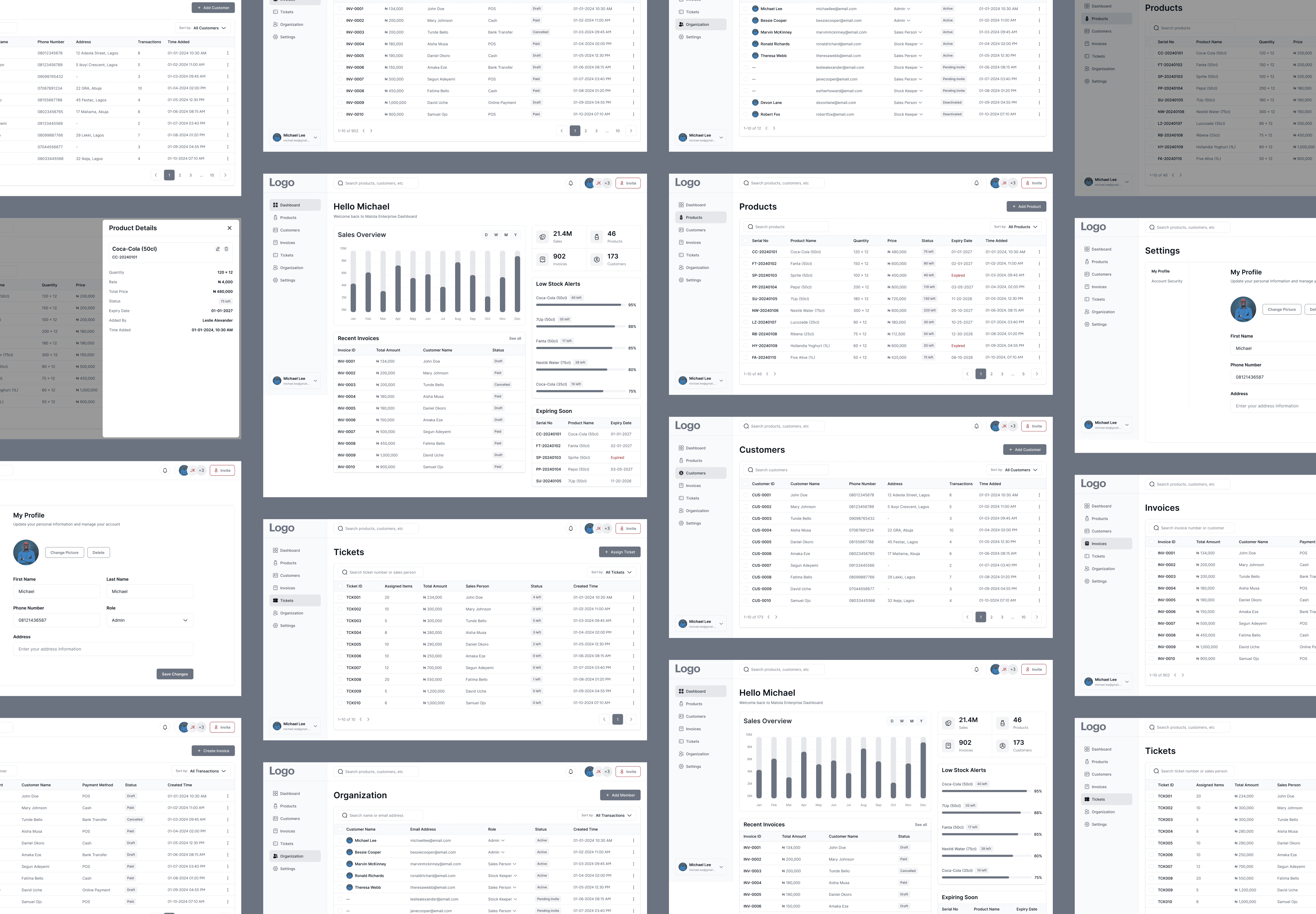
Started with low-fidelity sketches for dashboards and tables.
Iterated with client feedback before moving into high-fidelity mockups.
Visual Design
Chose a clean, data-friendly UI with structured tables, modals, and dashboards.
Used clear typography and iconography to make complex data easier to scan.
Designing Key Experiences
I focused on designing experiences that aligned directly with user needs:
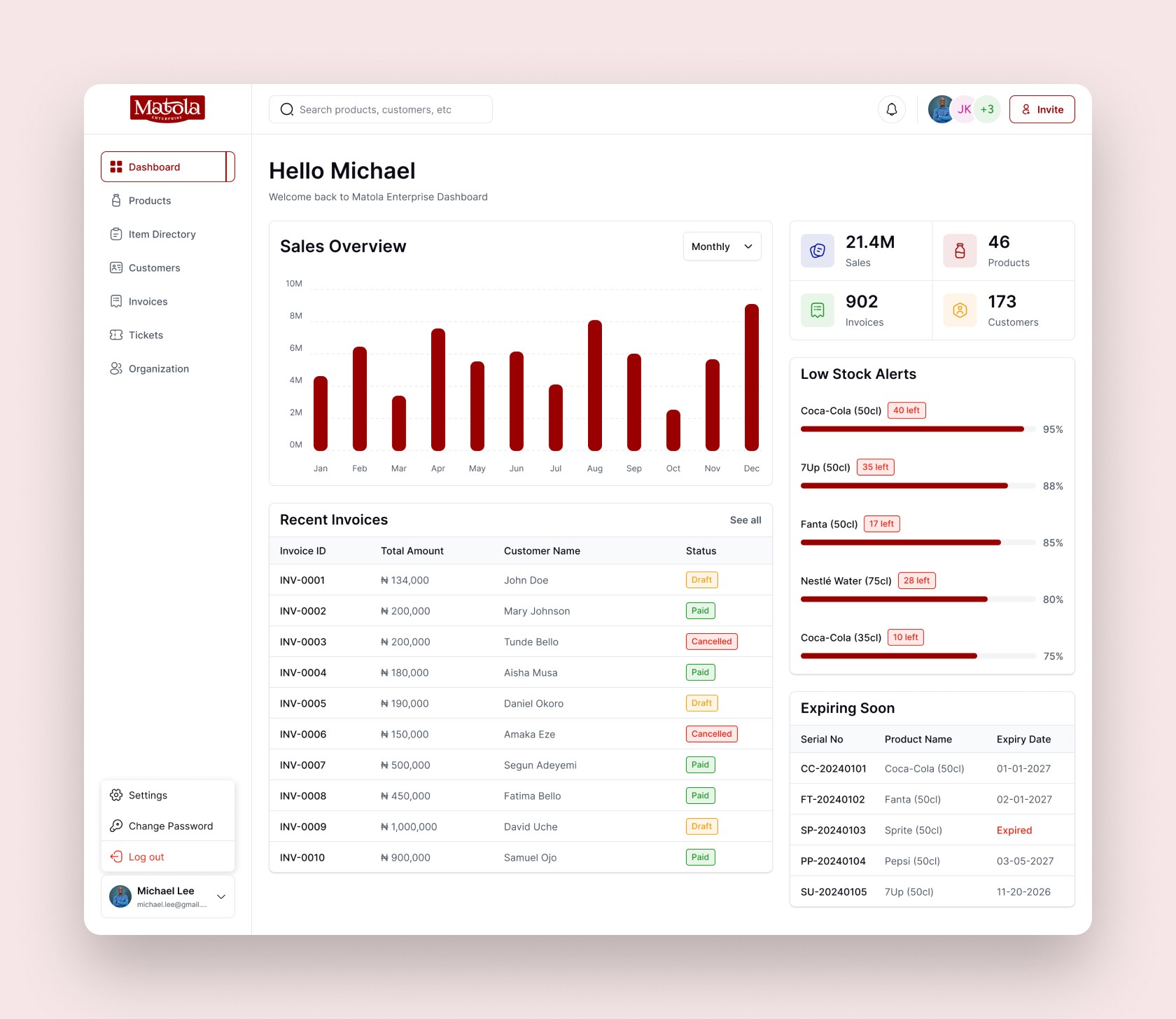
Dashboard Overview
Displays real-time insights: total stock, sales performance, low-stock alerts, and expiry warnings.
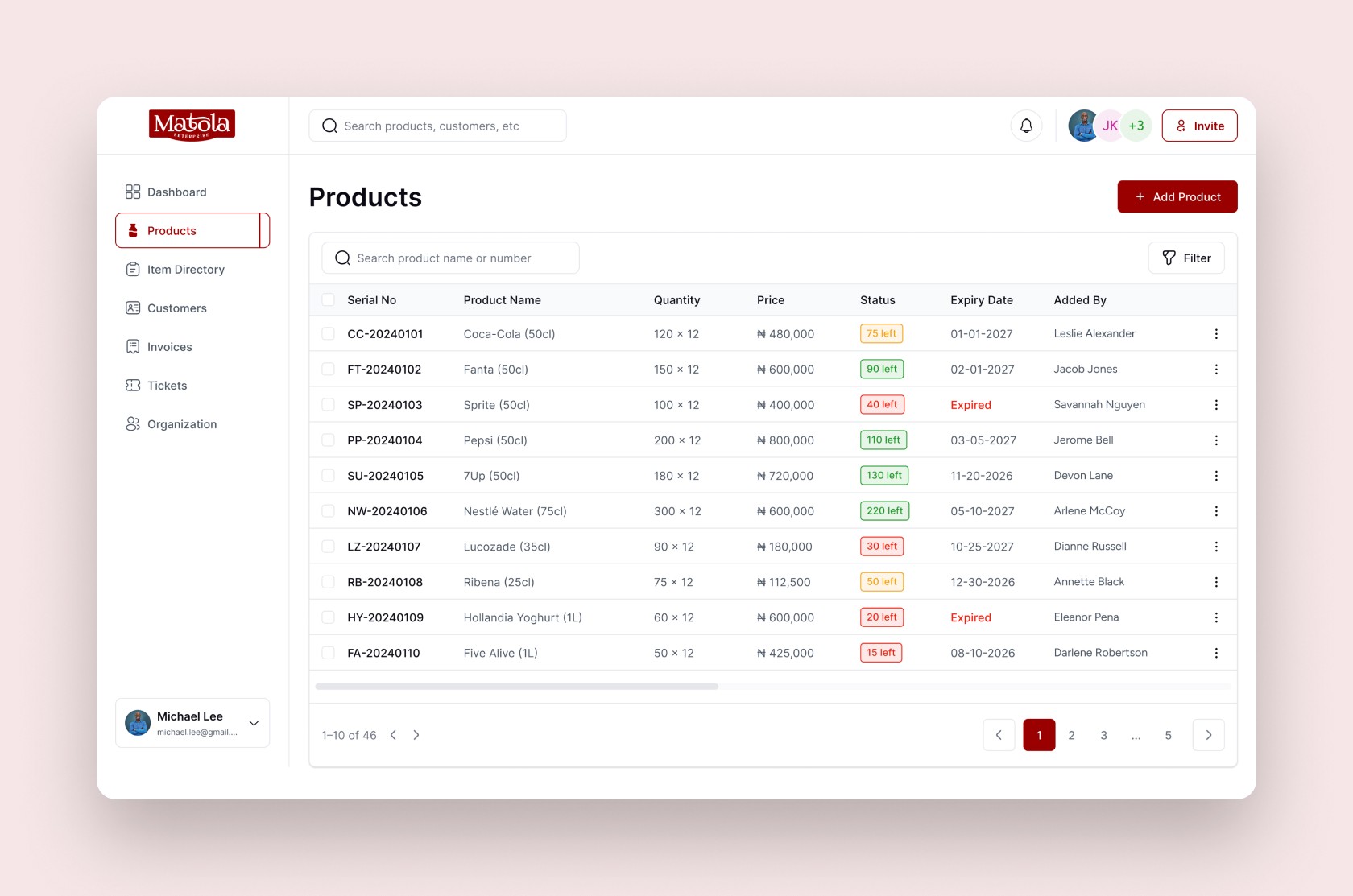
Stock Management Table
Structured with columns for product name, batch number, quantity, price, date added, and status. Admins can easily see which products are running low or nearing expiry.
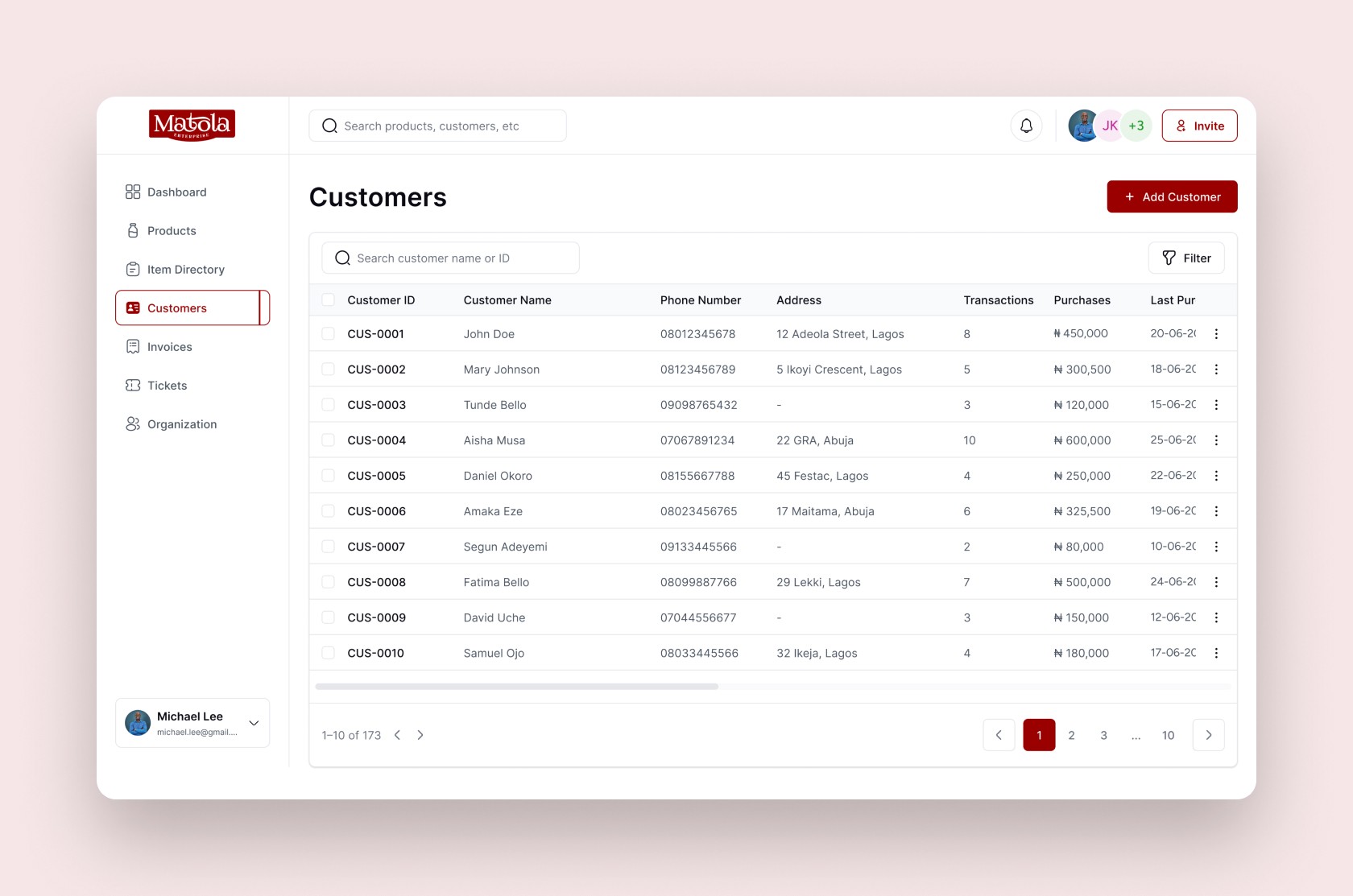
Customer & Transaction Pages
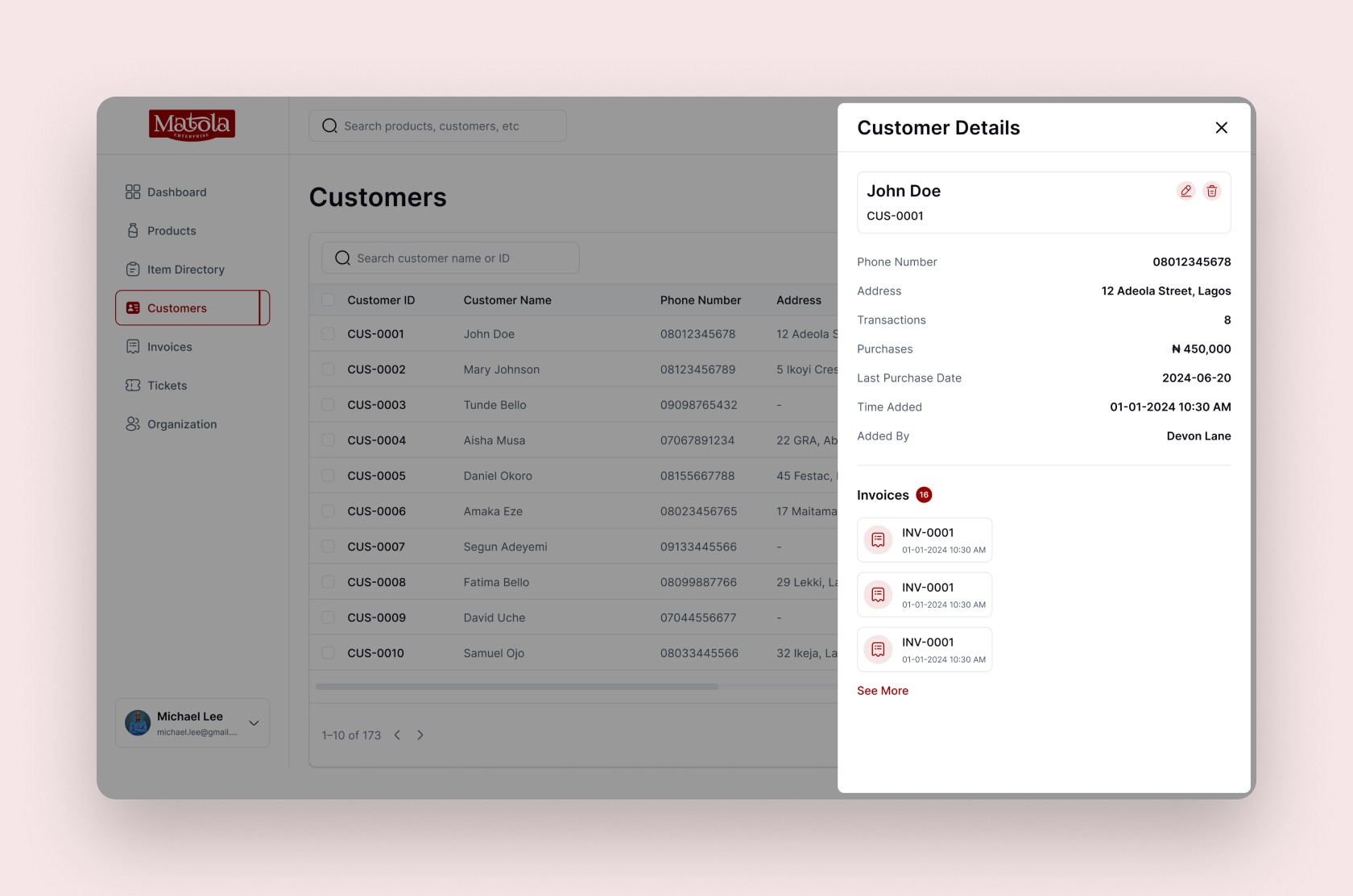
Customer details stored for quick invoice generation, while transaction history tracks every sale for accountability.
Ticket Creation Flow
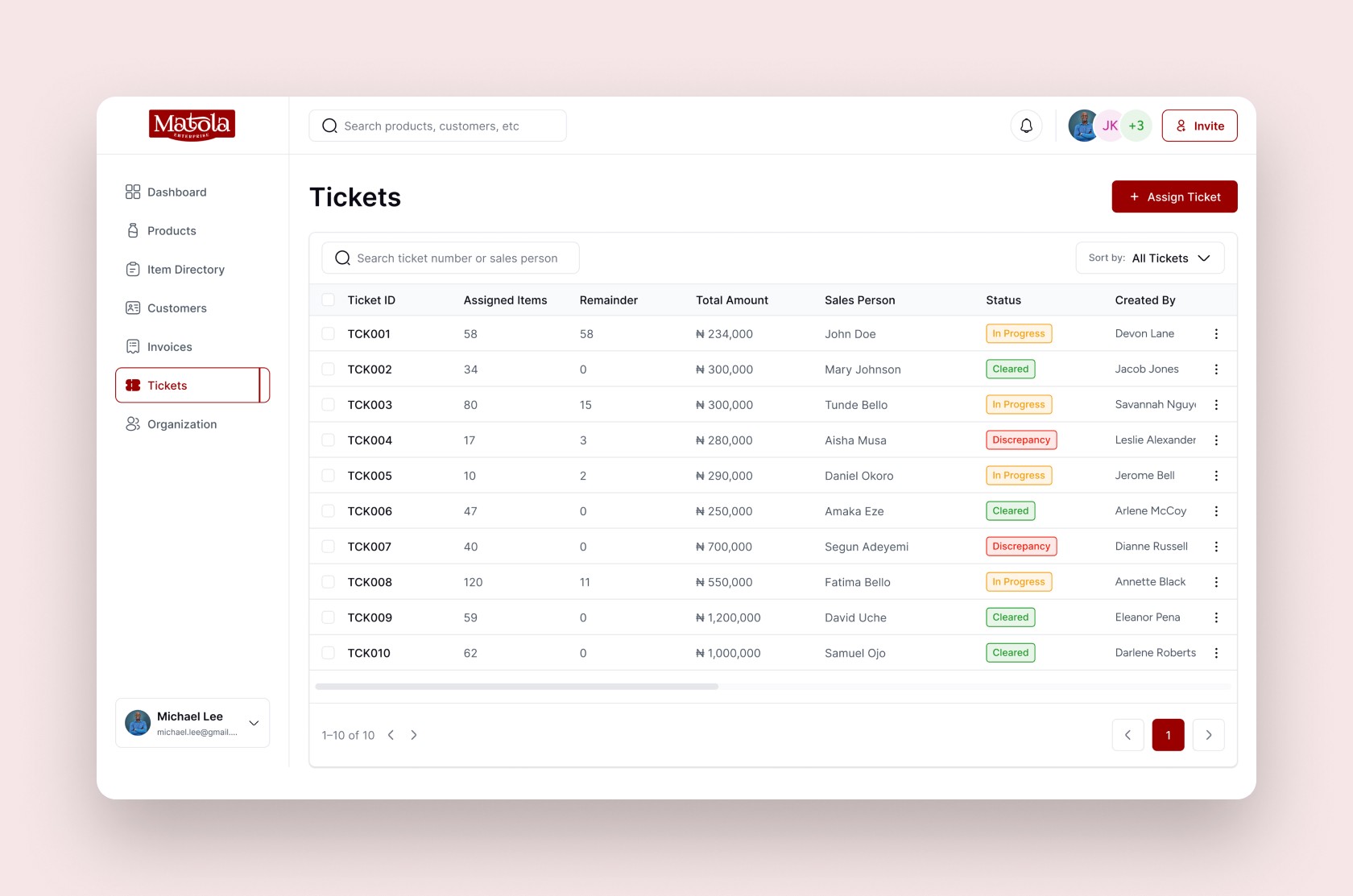
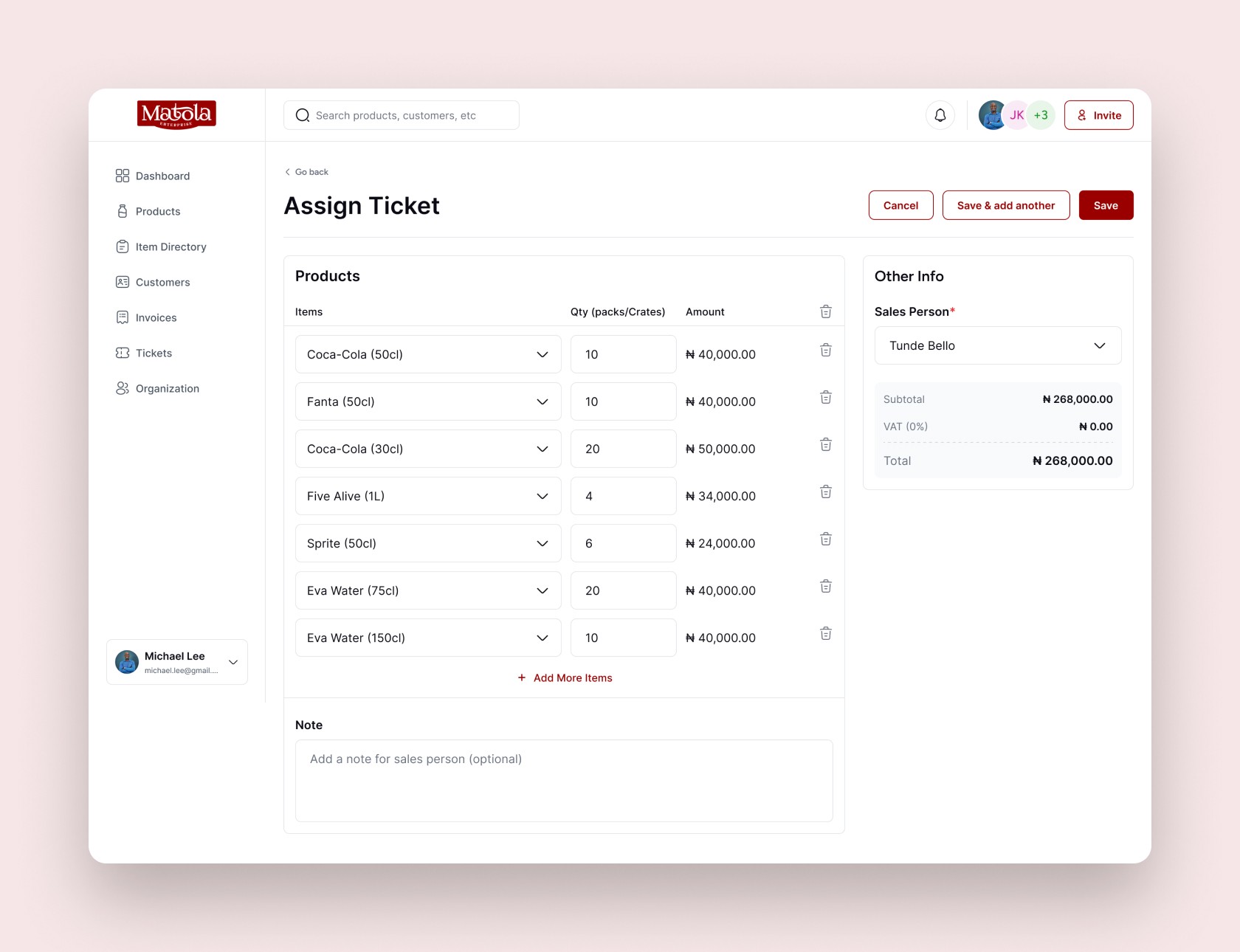
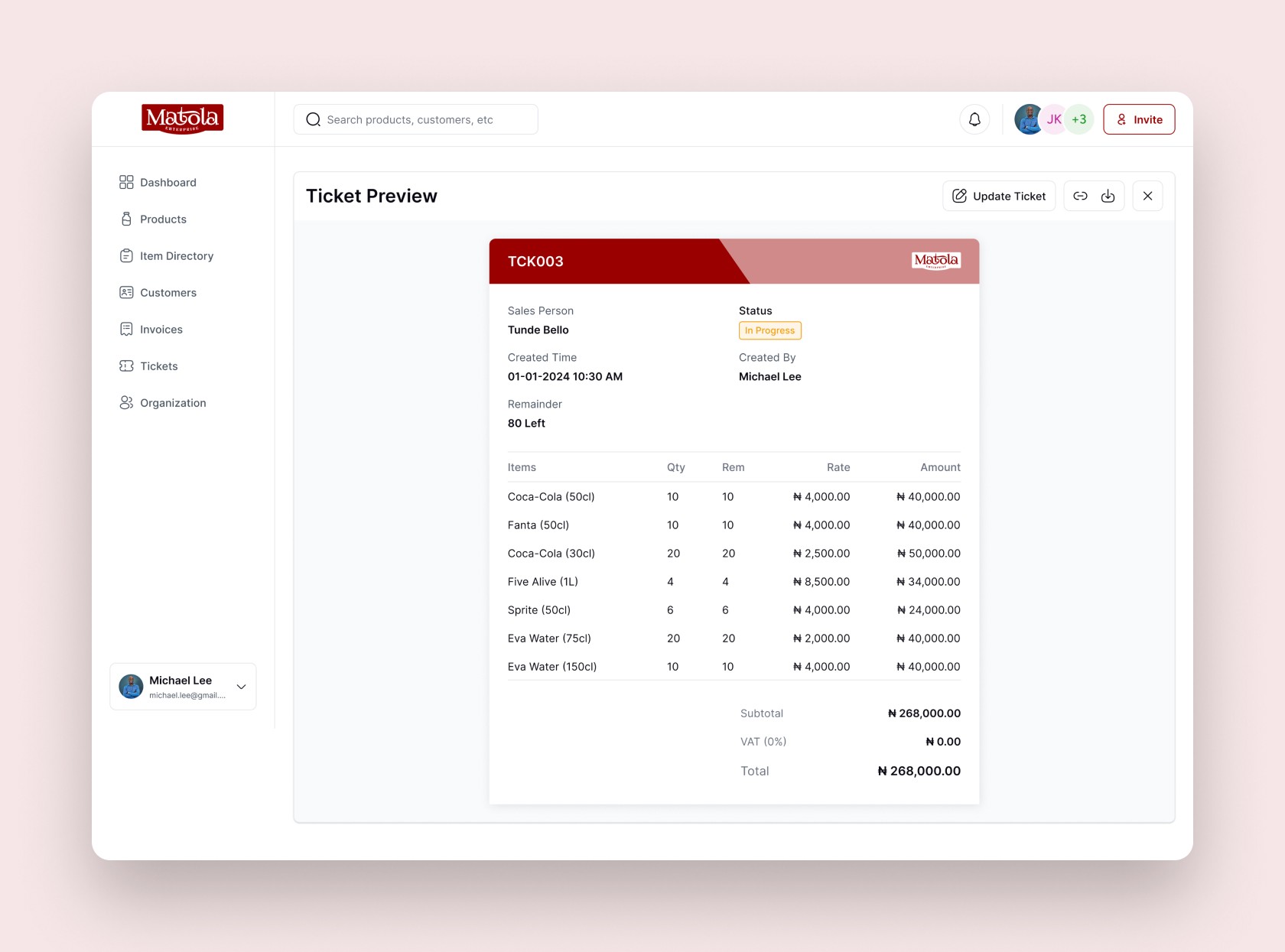
Admin assigns products daily to salespersons. The salesperson confirms assigned stock via a modal before leaving. At the end of the day, sales and returns are reconciled.
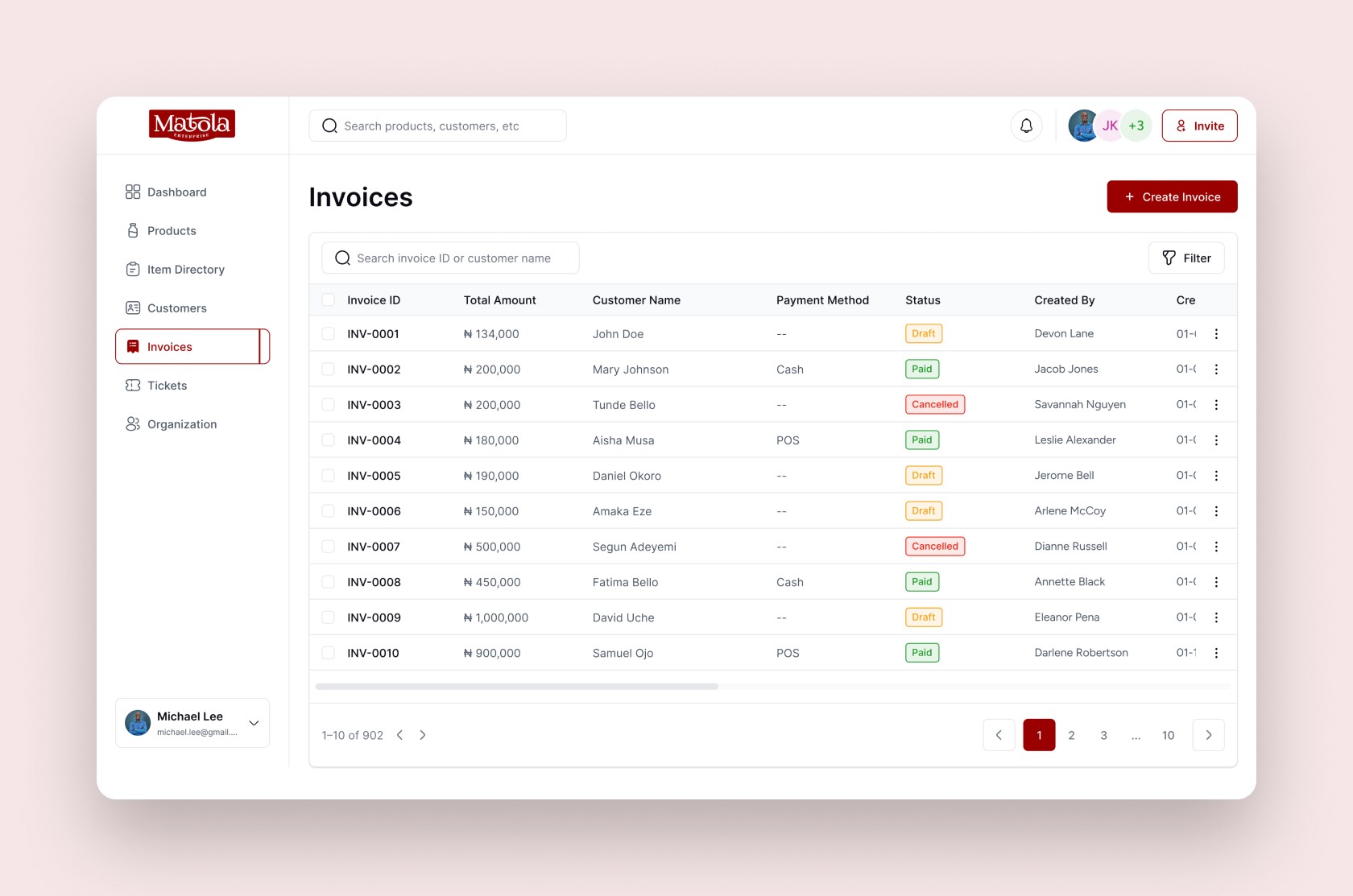
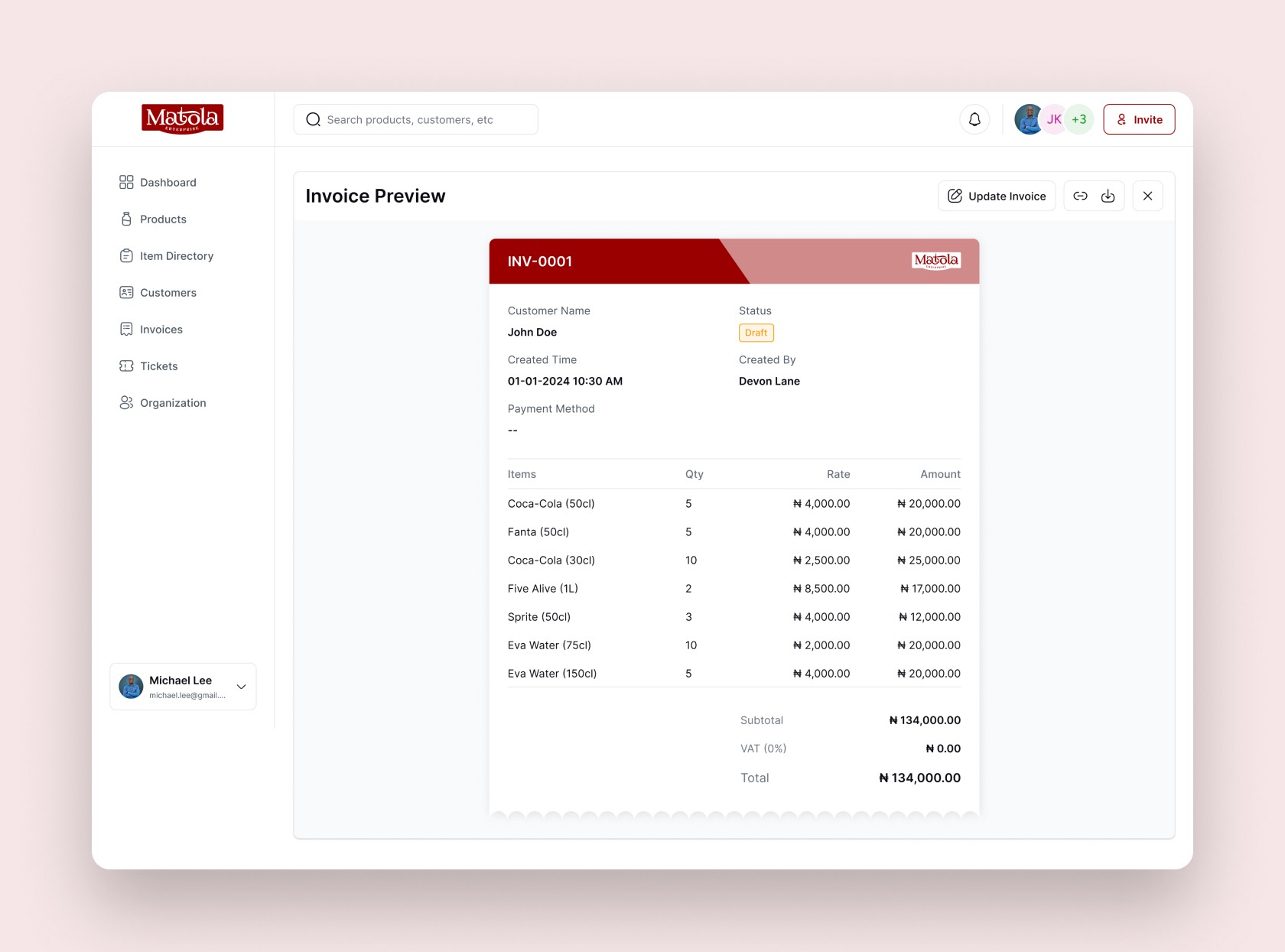
Invoice Generation
Automated invoice generation for customers after purchase, reducing delays and errors. This has a similar flow with the admin's ticket creation
Organization / Team
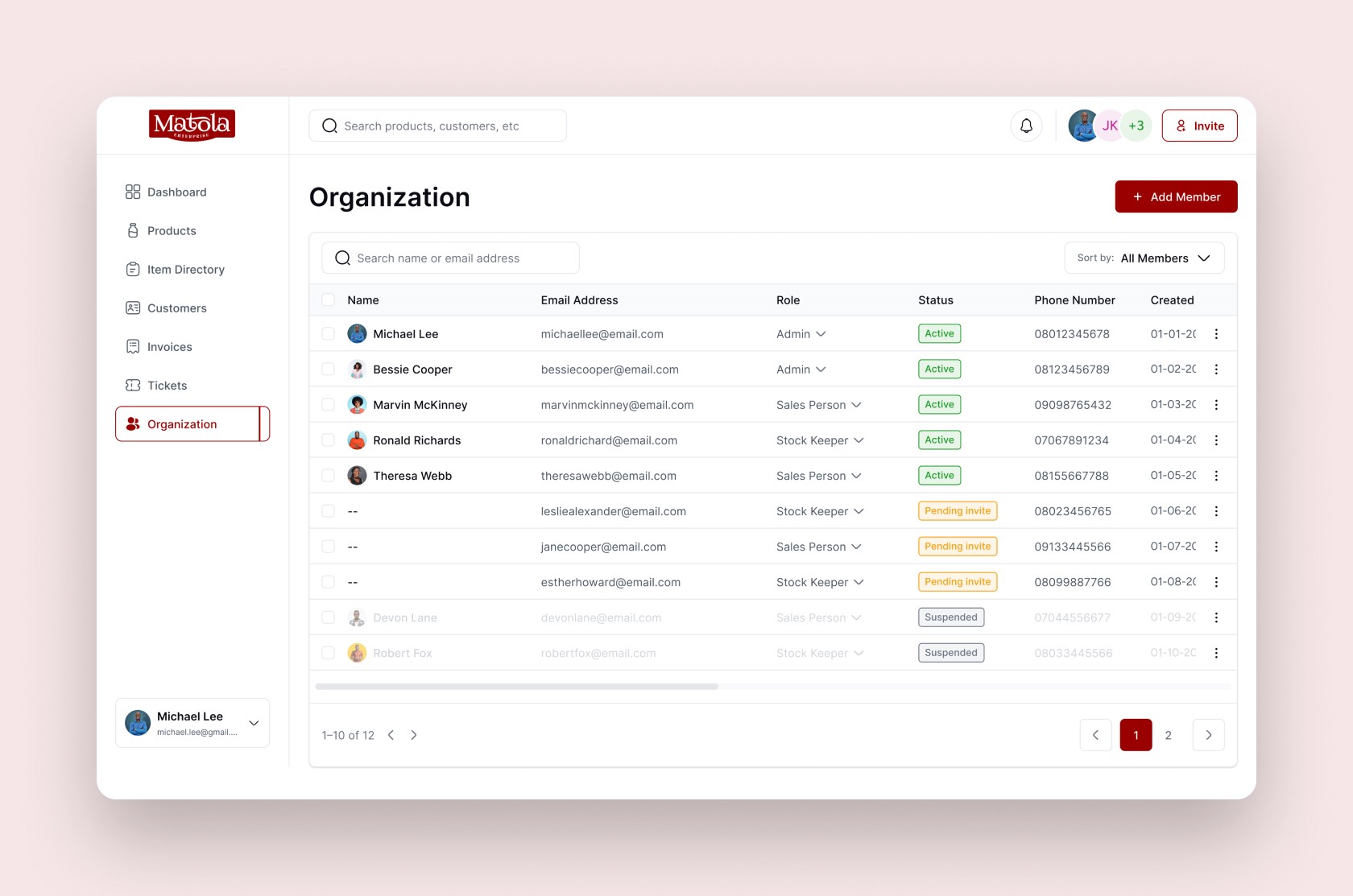
Central hub to manage the company profile, members, roles, and granular permissions. This is where admins invite teammates, assign responsibilities, and audit activity across the system.
The Outcome
The final product transformed the way Matola Enterprise manages sales and stock:
Efficiency Boost: Sales recording and invoicing became instant, reducing customer waiting time.
Accountability: Ticket assignments created a clear trail of responsibility for every salesperson.
Inventory Accuracy: Real-time stock updates meant fewer errors and faster restocking.
Reduced Wastage: Expiry alerts helped the business act early on near-expiry products.
What I Learned
This project taught me how to design for practical, real-world business workflows where precision is critical. Some key learnings:
Tables can be complex: Designing stock and transaction tables required balancing dense data with readability.
Permissions matter: Differentiating between admin, salesperson, and stock keeper roles helped create clarity and avoid errors.
Simplicity wins: Even with complex operations, a clean and straightforward UI made adoption easier for non-technical users.
Looking ahead, I see opportunities to enhance the product further with analytics dashboards and mobile-first optimization for salespeople on the move.