Creative Marketplace and Platform for Video Collaboration
tifi.tv is a video-first platform designed to serve as an agency for video editors, a space where creativity meets reliability. The vision was to create a platform where editors could find consistent job opportunities, clients could quickly connect with skilled professionals, and enthusiasts could access inspiring content.
Role
UI/UX Designer
Web
Creative Media & Entertainment
3 weeks
Figma, Adobe Illustrator
Setting the Stage: Product Overview
Think of tifi.tv as a digital studio. On one side, it acts as a talent agency for video editors, matching them with clients who need their expertise. On the other side, it’s a content hub filled with videos and blog posts that both educate and inspire. With pages tailored to specific audiences — editors, clients, and enthusiasts — the platform creates a balanced ecosystem where everyone finds value.
The Story Conflict: The Problem
Before tifi.tv, the landscape for video editors and clients was fragmented. Editors struggled to find stable, high-quality projects, leaving them uncertain about income and career growth. Clients wasted hours combing through portfolios and vetting freelancers, often unsure of reliability or professionalism.
Meanwhile, students and enthusiasts who wanted to learn video editing were overwhelmed by the sheer amount of scattered online content with little curation. What was missing was a single platform that could simplify the hiring process, provide opportunities for editors, and deliver engaging, curated content for the wider creative community.
The Script: Project Goals
The mission of tifi.tv was clear — to create a seamless and accessible platform that connects video editors and clients while also acting as a hub for education and inspiration. The goals included:
Building a marketplace where editors can showcase their skills and find consistent work.
Simplifying the hiring process for clients with efficient search, filters, and communication.
Offering a curated content hub where enthusiasts can learn, explore trends, and be inspired.
Ensuring accessibility so that all users, regardless of ability, can engage with the platform.
Audience Spotlight: Target Users
At the heart of this platform were three key audiences.
Clients, the “producers,” needed reliable editors to bring their vision to life.
Video editors, the “creators,” wanted visibility and consistent opportunities to practice their craft.
General audience, the “fans and learners,” sought engaging and educational content to fuel their creative journey.
Behind the Scenes: Research & Insights
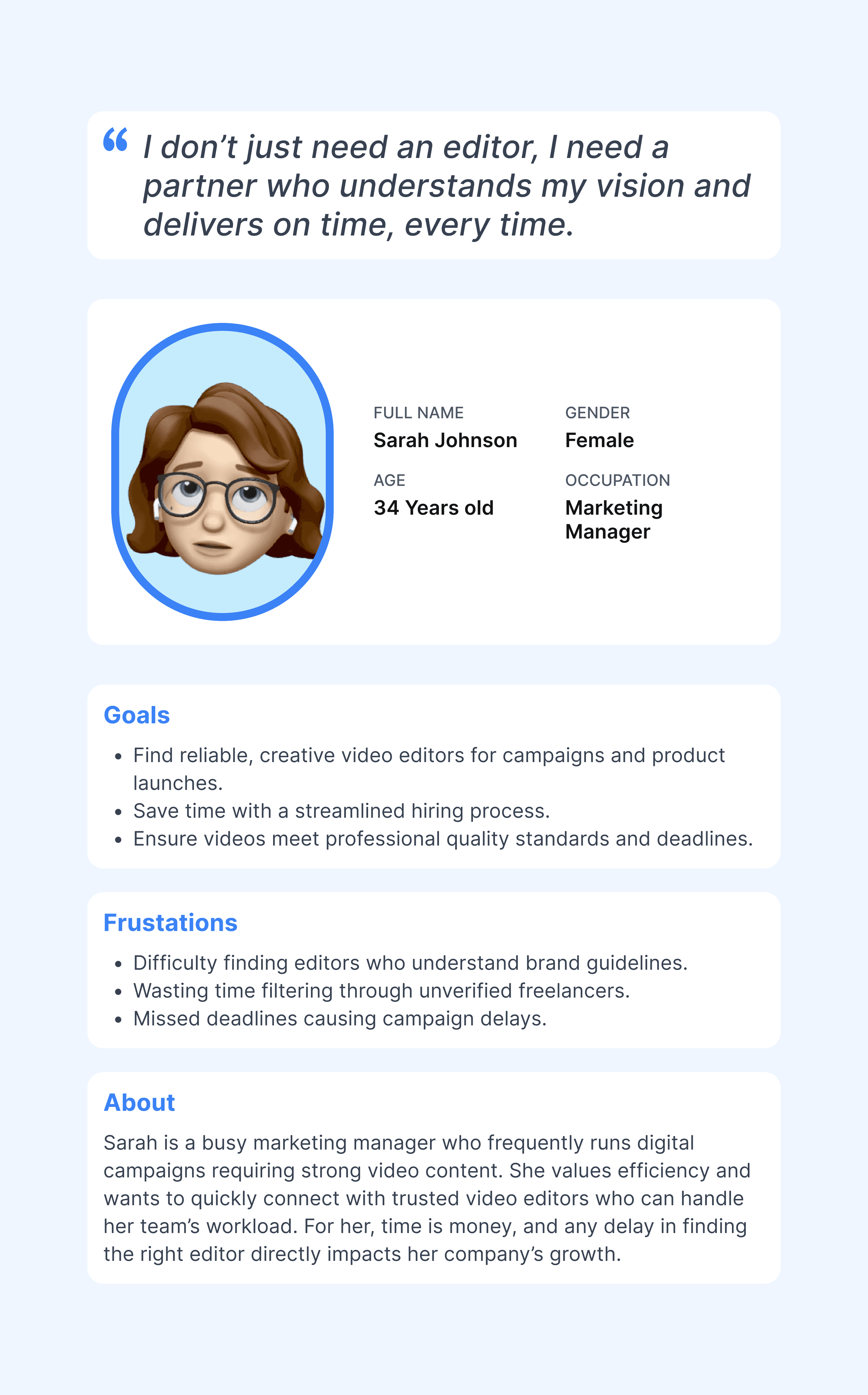
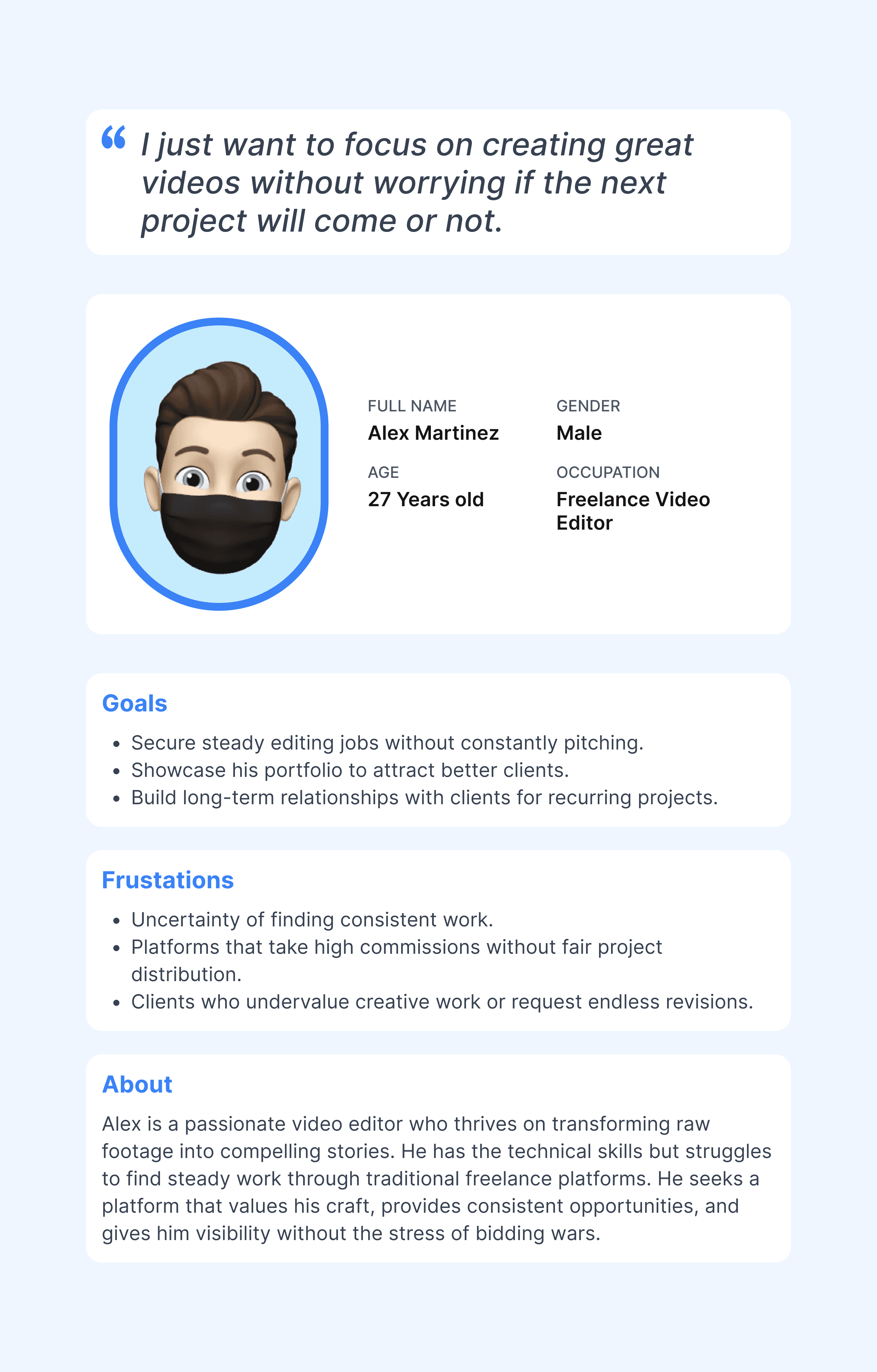
To ground the design in reality, I conducted user research with potential clients, freelance editors, and film students. From this, I built personas that represented the core users. Sarah Marketing, a busy marketing manager, needed a straightforward way to hire trusted editors without wasting time. Alex Enthusiast, a freelance video editor, wanted a platform that could recommend him for jobs and at the same time get curated resources and inspiring content to learn from.
Findings:
Key insights revealed that clients valued trust and efficiency, editors valued opportunity and exposure, and the general audience valued curated, engaging content. Accessibility also emerged as a critical theme, with users highlighting the need for features like video captions and clear navigation.
User Flow
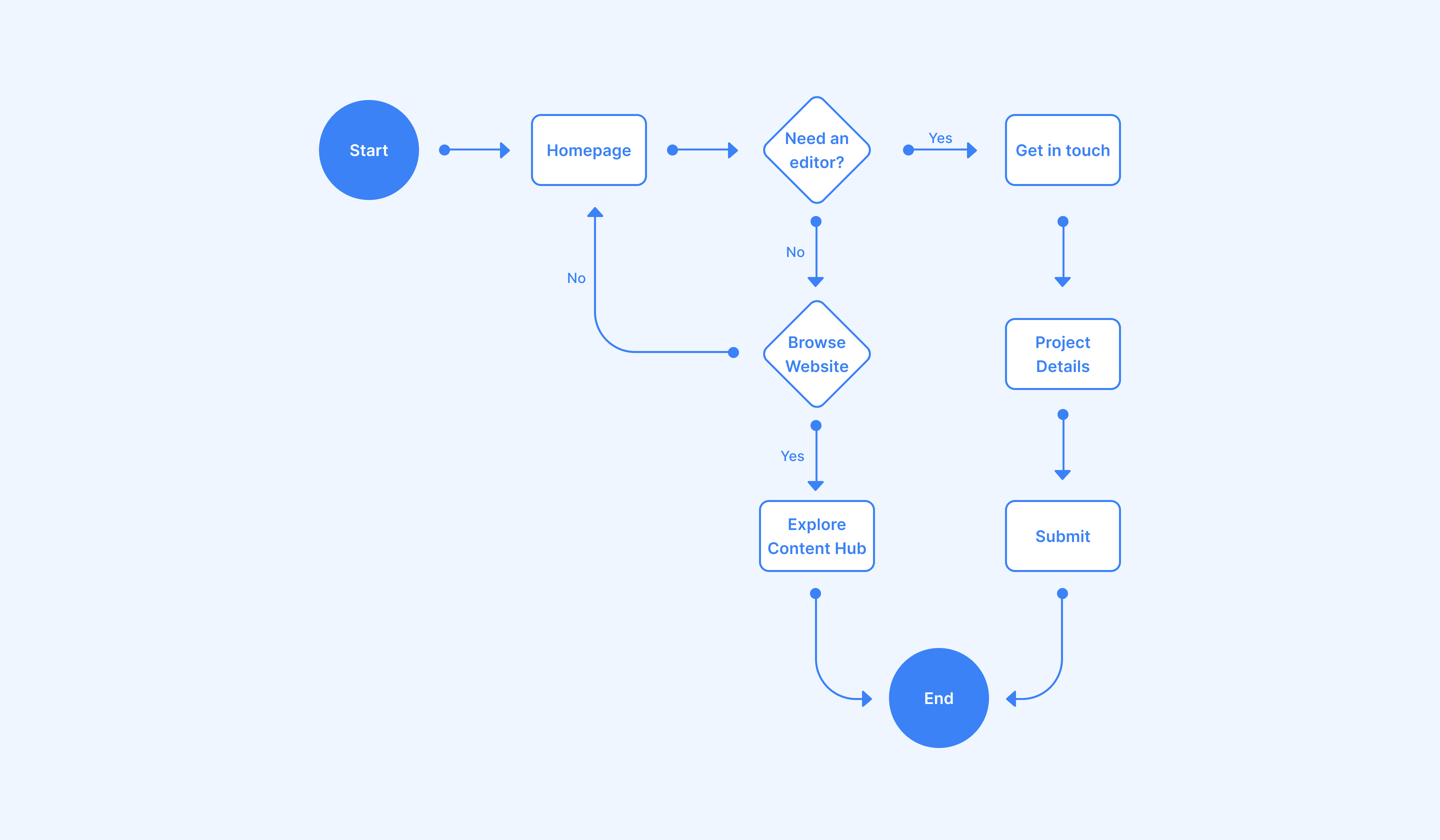
I made a complete representation of primary task flows user would take while using the product, from the entry point using product features to achieve their end goal.
Site Map
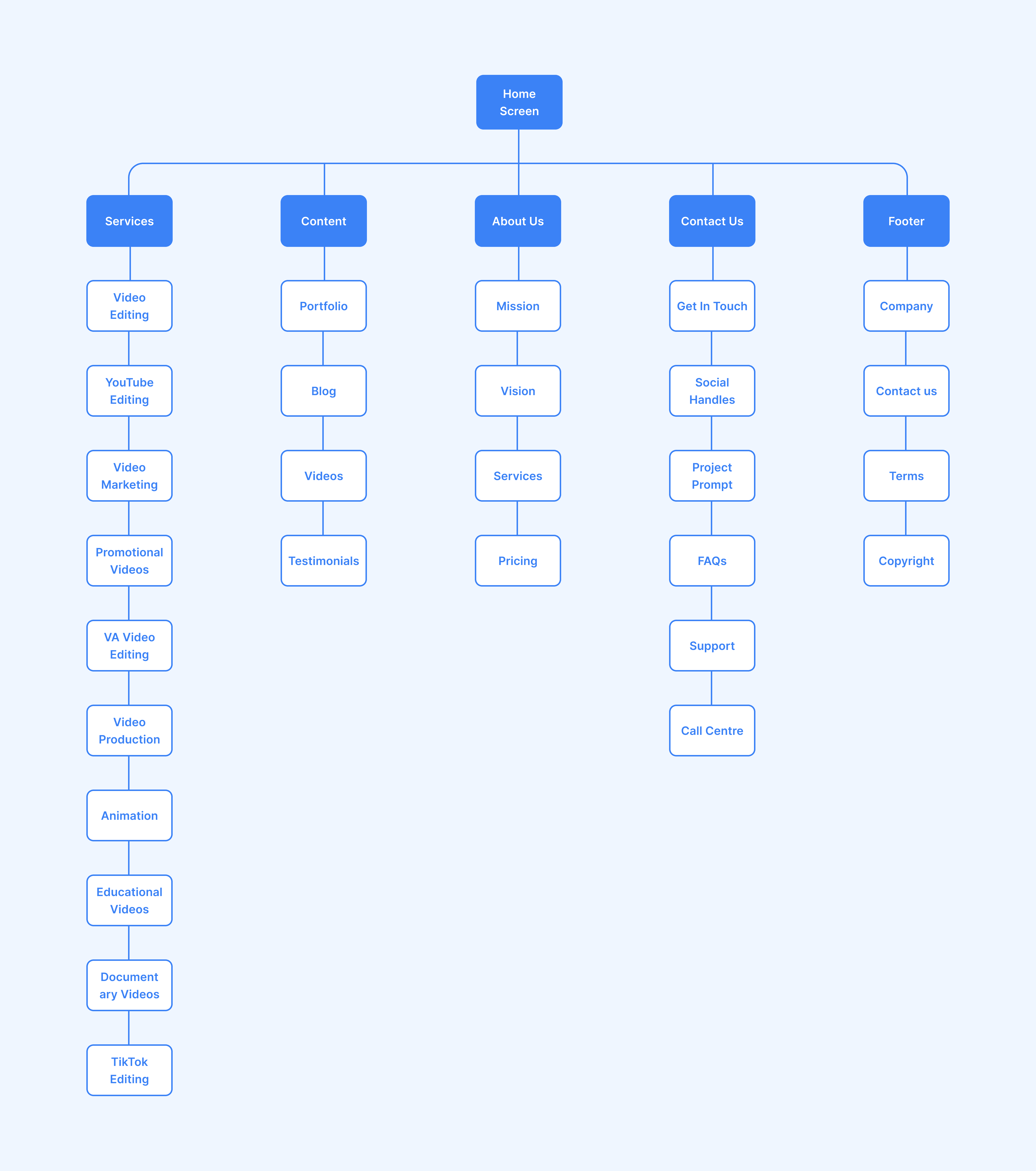
Difficulty with website navigation was a primary pain point, I therefore made a strategic information architecture decision to help simplify the overall navigation.
The Edit: Design Process
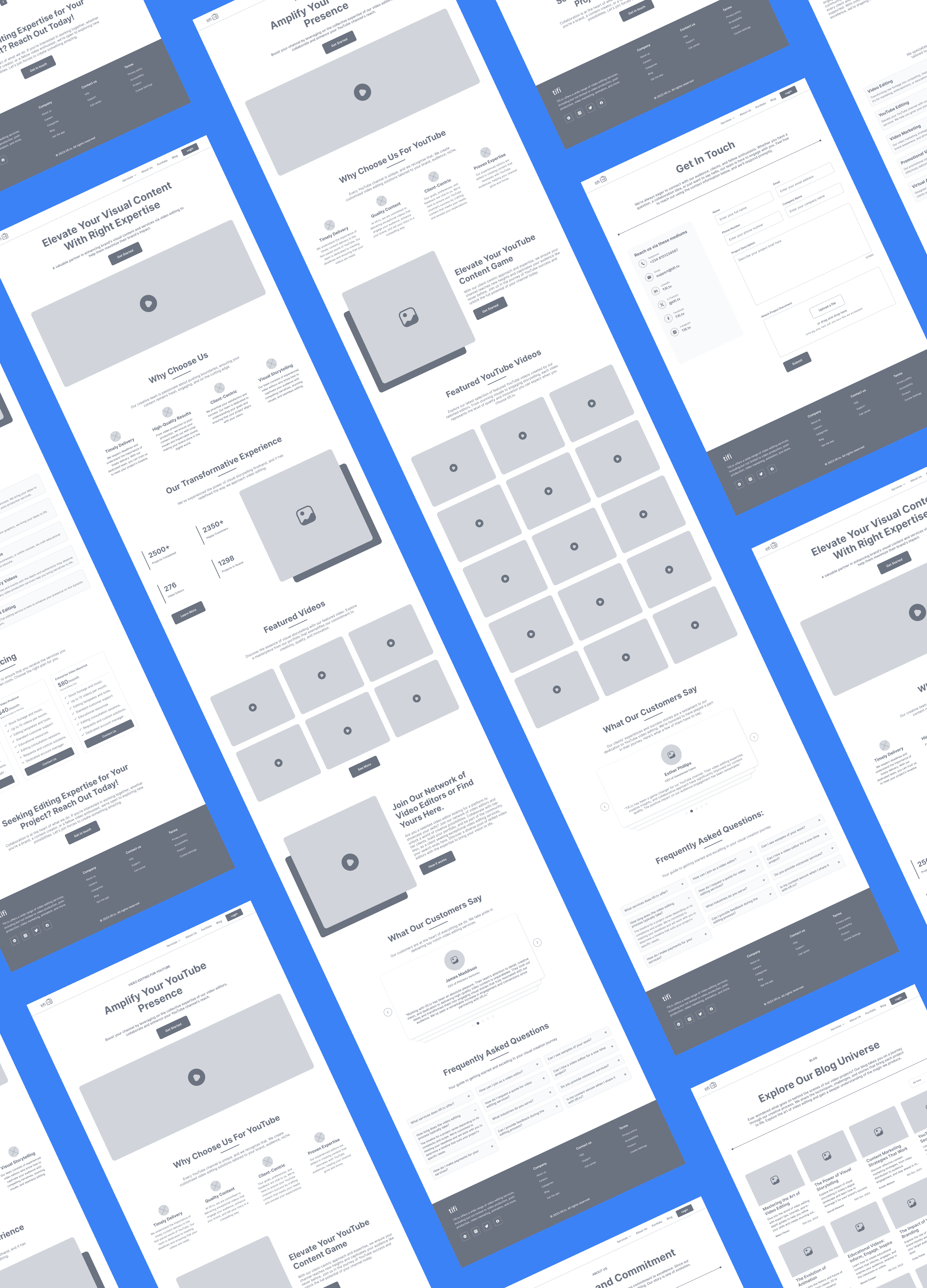
I started with low-fidelity wireframes, mapping out flows for clients to hire editors, editors to showcase their work, and audiences to browse content. The client flow emphasized speed and simplicity: filters, portfolios, and direct hiring. For editors, the focus was on profile building and visibility. For the general audience, the design leaned toward immersive video previews and easily scannable blog posts.
Style Guide
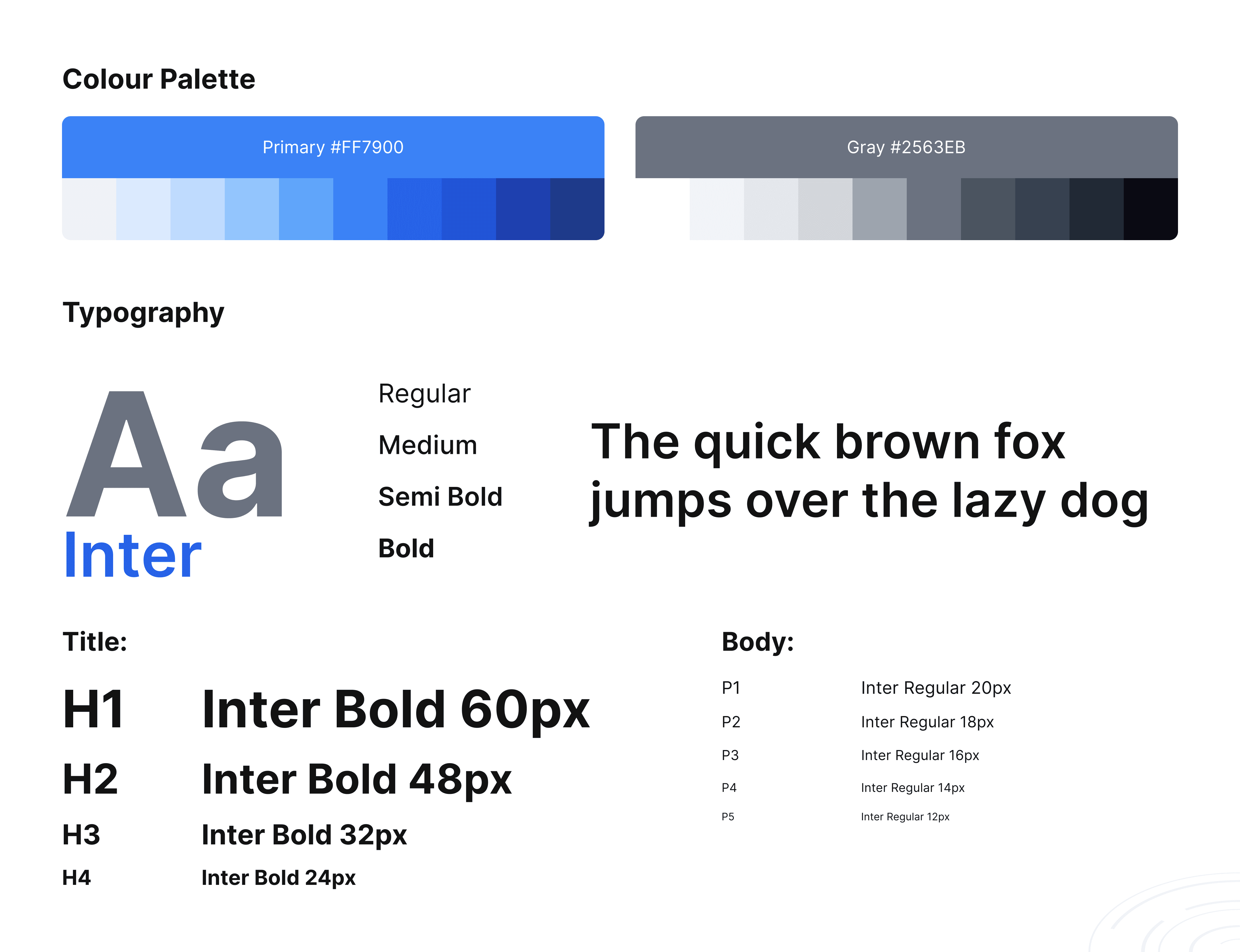
As the project evolved into high-fidelity designs, I balanced video-heavy visuals with clean layouts to prevent overwhelming users. Accessibility was embedded by ensuring proper color contrast, adding alt text for imagery, and designing video players with captions and audio description options. Interaction elements like hover previews, curated recommendations, and smart search were introduced to create a dynamic experience.
Final Cut: The Solution
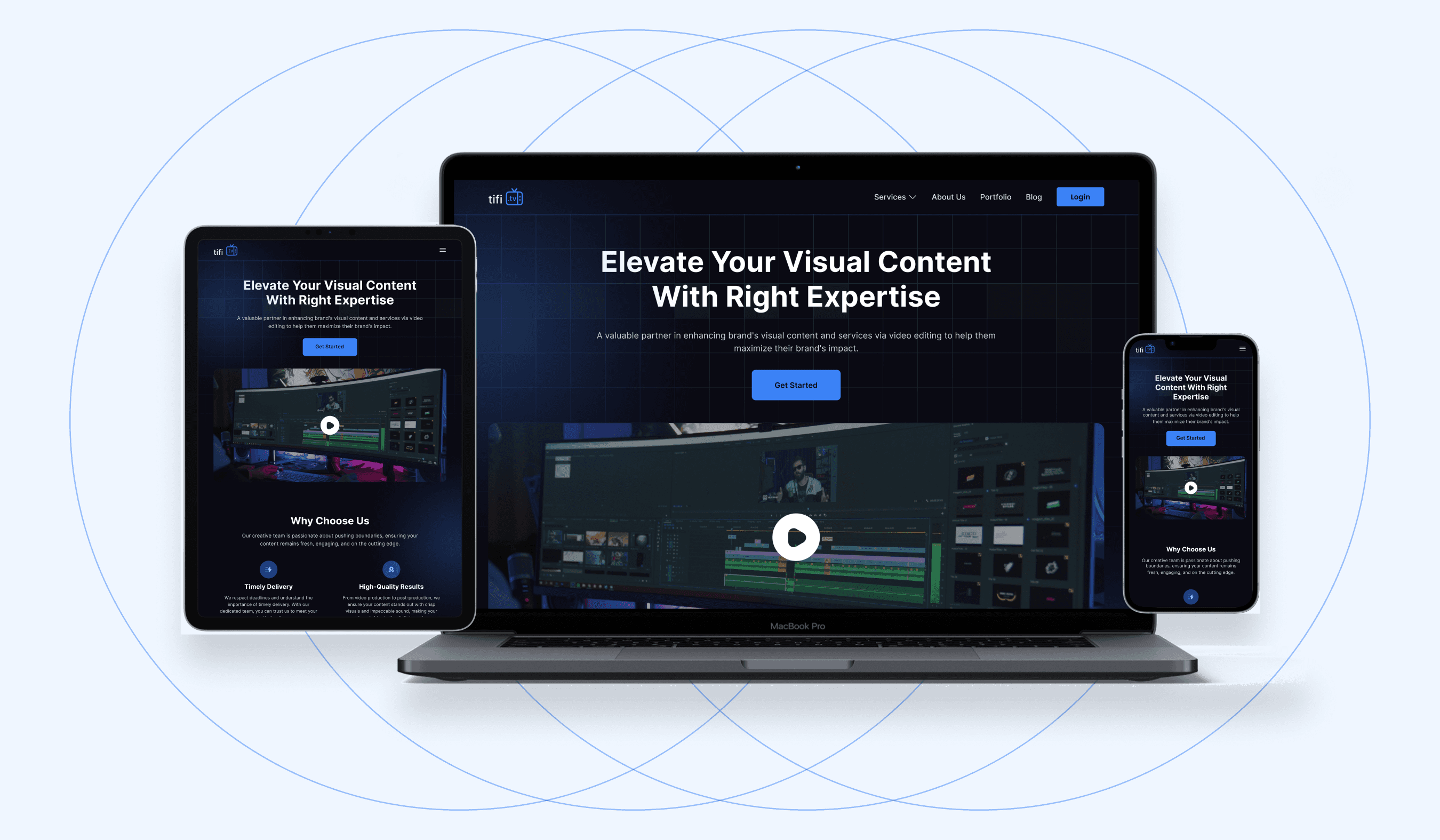
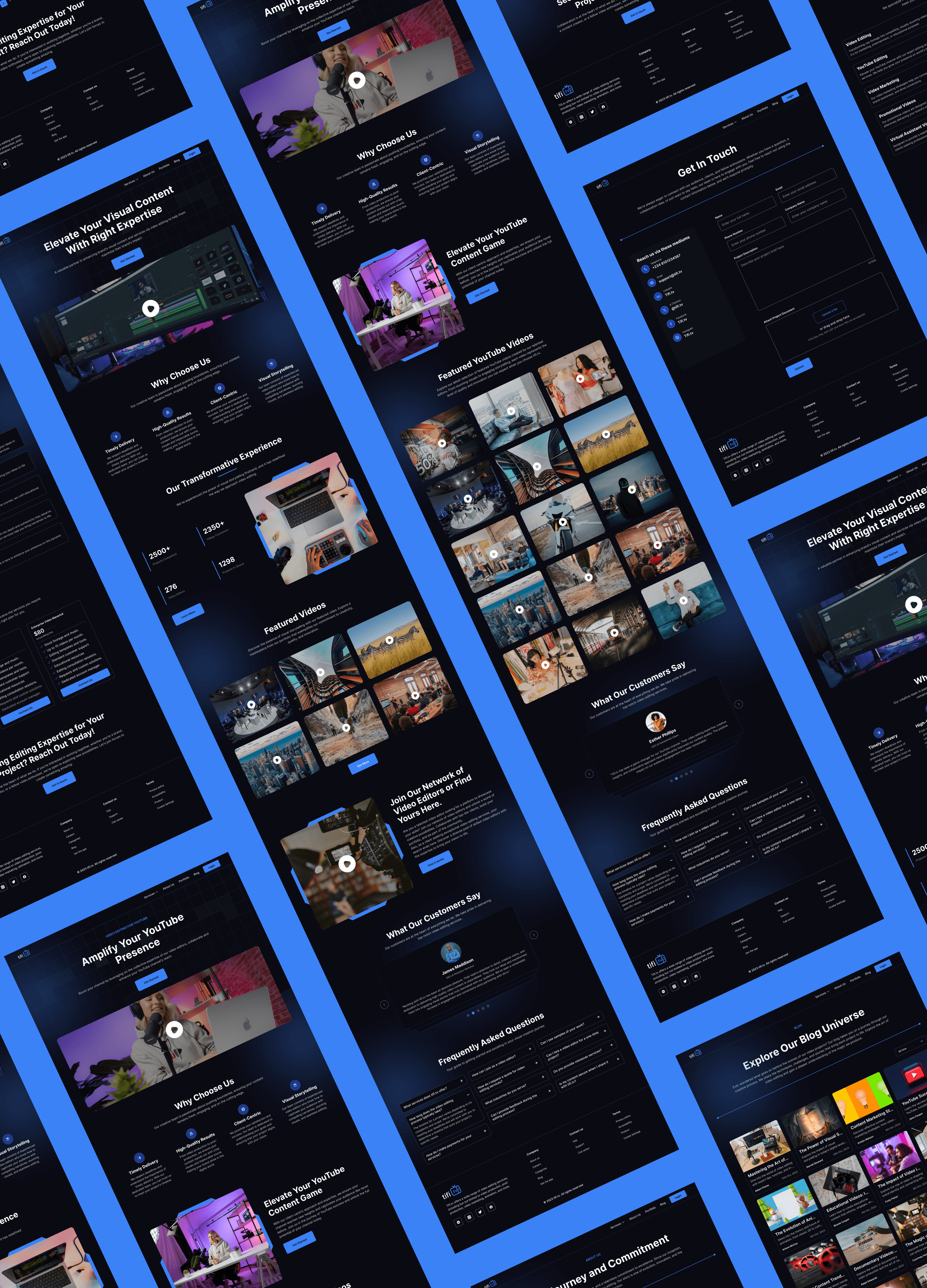
The final design for tifi.tv resulted in a visually rich yet user-friendly platform. The homepage greets visitors with impactful videos and clear calls-to-action for clients and editors. The content hub blends videos and blog posts seamlessly, offering tutorials, industry insights, and inspirational stories. Audience-specific landing pages ensure that each user type — client, editor, or enthusiast — has a tailored experience. For clients, a hiring flow makes browsing and connecting with editors efficient, while editors can showcase portfolios and gain exposure.
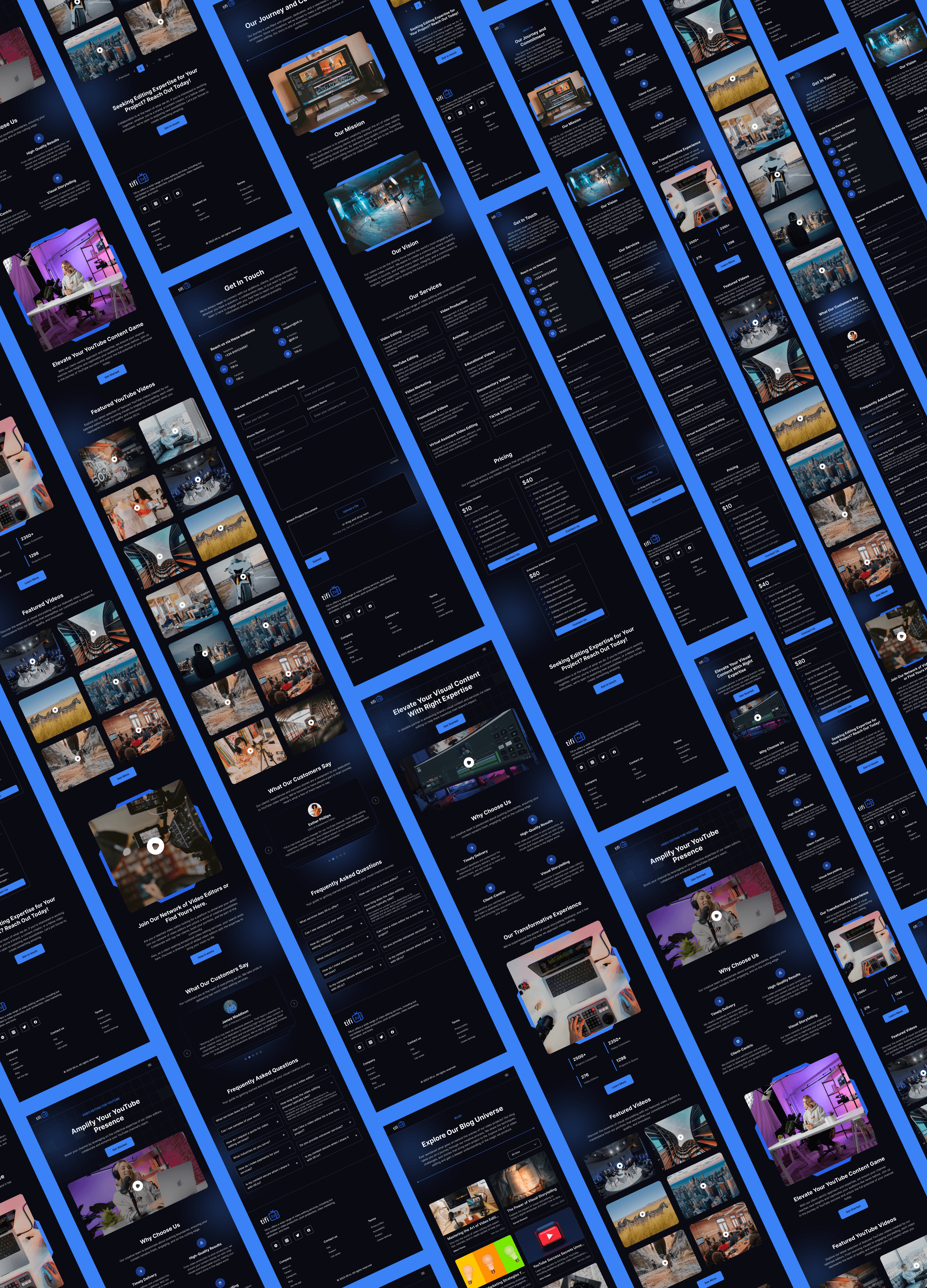
Responsive Screens
I integrated accommodations for diverse screen sizes into my mockups. Recognizing that users access the internet through an array of devices, I prioritized enhancing the browsing experience across a spectrum of screen dimensions, encompassing mobile and tablet interfaces.
The Impact: What Changed
The design of tifi.tv positioned it as more than just a job marketplace; it became a community hub. Editors gained access to consistent opportunities, clients experienced smoother hiring processes, and learners had a reliable source of curated content. Beyond functionality, the platform fostered inclusivity by embedding accessibility considerations, ensuring it could reach and serve a diverse audience.
Closing Credits: Reflections as a Designer
Designing tifi.tv taught me the power of storytelling in design. Balancing the needs of three distinct audiences challenged me to think holistically about user flows and priorities. I learned that accessibility isn’t just a checklist, but a principle that shapes inclusive experiences. Most importantly, I realized that content and design are inseparable — beautiful interfaces must be paired with valuable, meaningful content to truly engage users. Like editing a film, the design process was iterative, requiring constant refinement until all the pieces came together into a cohesive final cut.